GORGONA – ART AS A WAY OF EXISTENCE
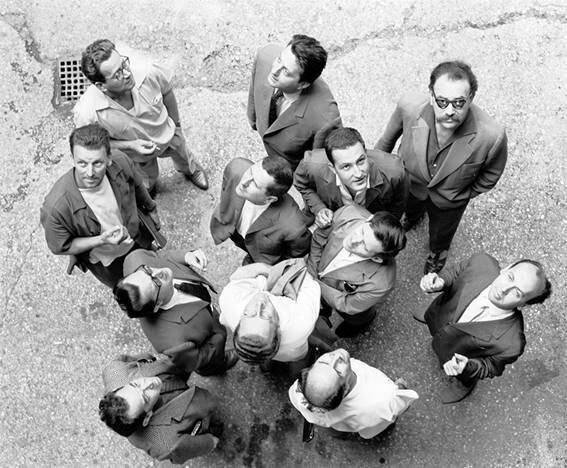
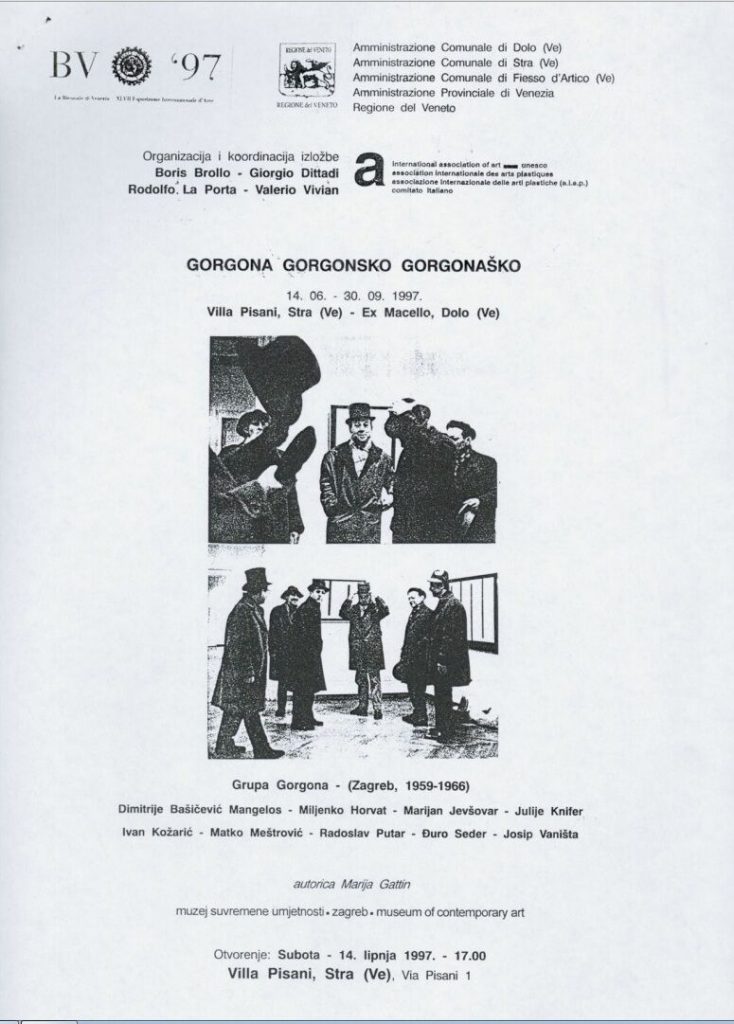
“From 1959 to 1966 there existed in Zagreb a group of artists of whom little has remained in the written art history of this region. Gorgona was not an art group in the usual sense, whose aim is to promote a particular ideological and aesthetic concept and to recruit its protagonists from among the elite of the local art scene. It was a group of artists who shared common affinities in a much broader sense than any stylistic programme would imply. The very discreet and unspectacular nature of Gorgona’s activities is one of the reasons why it went unrecorded in the written cultural tradition of this region, and was only rarely mentioned in the oral one. The members of Gorgona were the painters Marijan Jevšovar, Julije Knifer, Đuro Seder and Josip Vaništa, the sculptor Ivan Kožarić, the architect Miljenko Horvat, and the art historians Dimitrije Bašičević, Matko Meštrović and Radoslav Putar. In its professional make-up, and even more in the absence of a programme that would act as a cohesive force and stimulate group activity, Gorgona was not an art group in the usual sense of the word. The fact that five of its members were artists does not fully explain the principles on which the group was founded. The ‘Gorgonian spirit’ shaped their individual works only indirectly, and each of them retained and continued to develop his own creative autonomy. Moreover, Gorgona brought together those rare artistic personalities who, through their own creative contributions, anticipated developments on the international art scene, rather than contenting themselves, like most others, with the eclecticism of long-exhausted art concepts.”*
In her attempt to define Gorgona’s enigmatic and in many ways unprecedented artistic activity, the art critic Nena Dimitrijević identifies three reference points in the art of the time which, taken together, enabled her to produce the first interpretation of Gorgona’s art. The first is contextual: the late 1950s as the moment when the Western spirit encountered Eastern philosophy and became interested in the experience of Zen Buddhism (Cage, Klein, La Monte Young). The second is the art of Yves Klein, who introduced the ideas of Eastern philosophy into European art and produced his first monochrome in 1950. The third is the activity of Fluxus (Brecht, Watts, Vostell, Roth, Filliou), above all because it paved the way for an aesthetics of silence and monotony, abolishing the traditional notions of the artistic act and the art object. Seen against these three points – the results of different and geographically distant spiritual, philosophical and artistic endeavours – it becomes clear that Gorgona was doing essentially the same thing, but in a completely unexpected place: Yugoslavia, where artists who considered themselves progressive were embracing the aesthetic concepts of Art Informel, Abstract Expressionism, action painting and lyrical abstraction. Acting as an informal group whose gatherings and walks its members regarded as the very essence of their art, Gorgona became a forerunner of later developments in post-war European art.
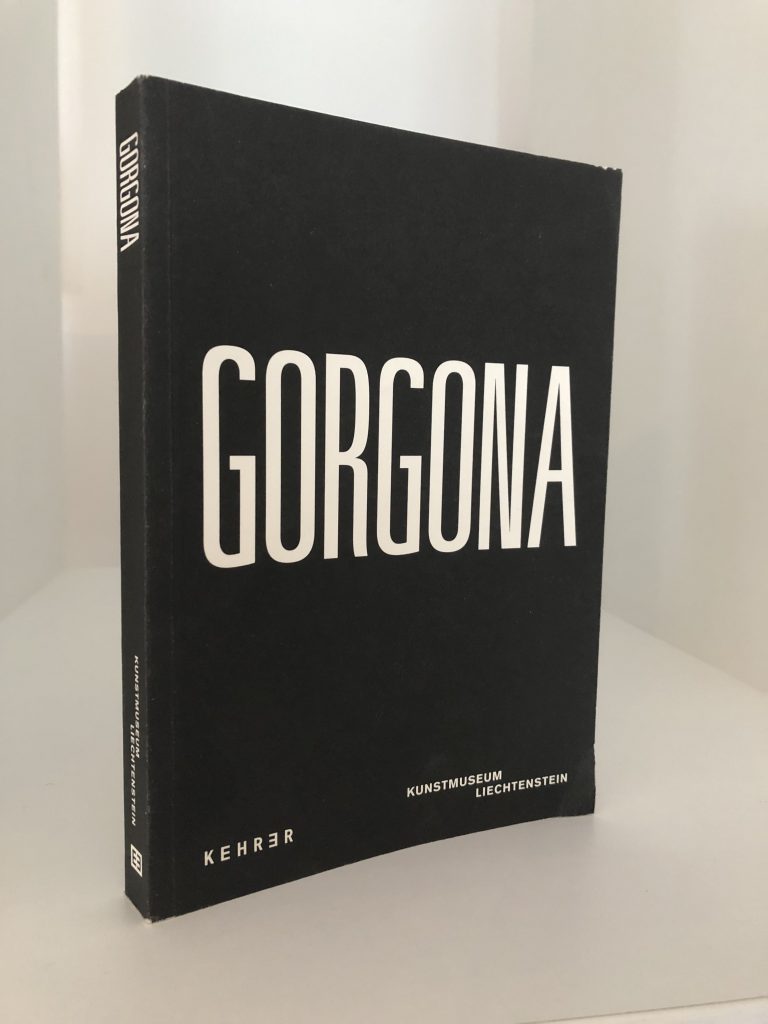
The most significant manifestation of Gorgona’s activity was the publication of the anti-magazine Gorgona. Seen from today’s perspective, this anti-magazine was a forerunner of the “book as artwork”, as defined much later by Germano Celant.
“With the anti-magazine Gorgona, the aesthetic principles of an entire generation were anticipated, and it is precisely through some of the ideas it presented that the future course of conceptual art was foreseen and defined.”*
Each issue of the anti-magazine is an autonomous work of art. Piero Manzoni, Robert Rauschenberg, Dieter Roth, Harold Pinter and Victor Vasarely took part in the project. The most radical realization of the idea behind the anti-magazine was that of Mangelos, whose issue of Gorgona was one never to be published, existing only in memory.
* Quotations from Nena Dimitrijević, Gorgona, Gallery of Contemporary Art, Zagreb, 1977.