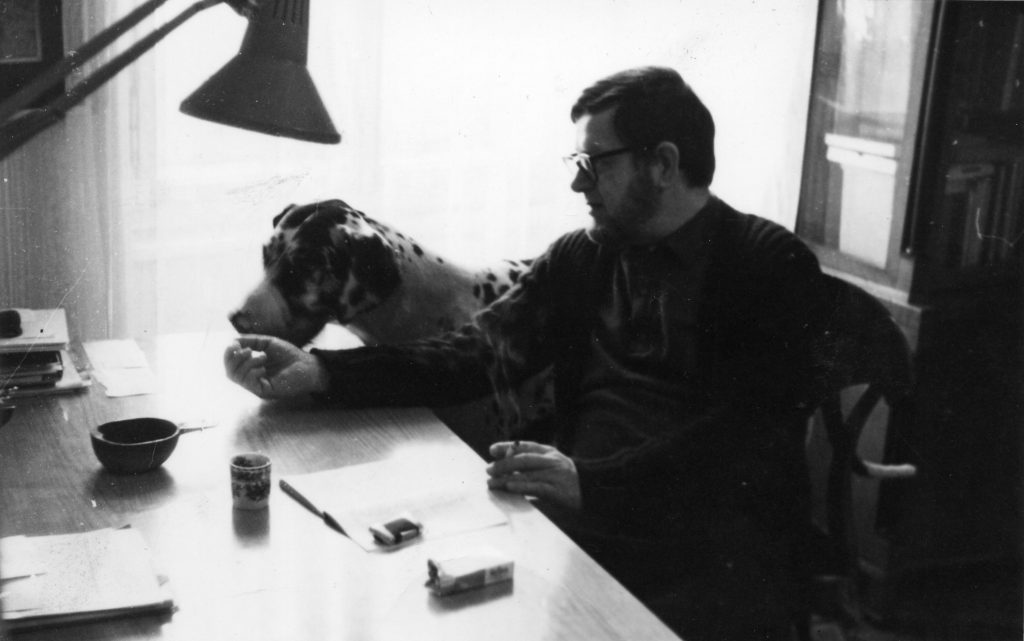
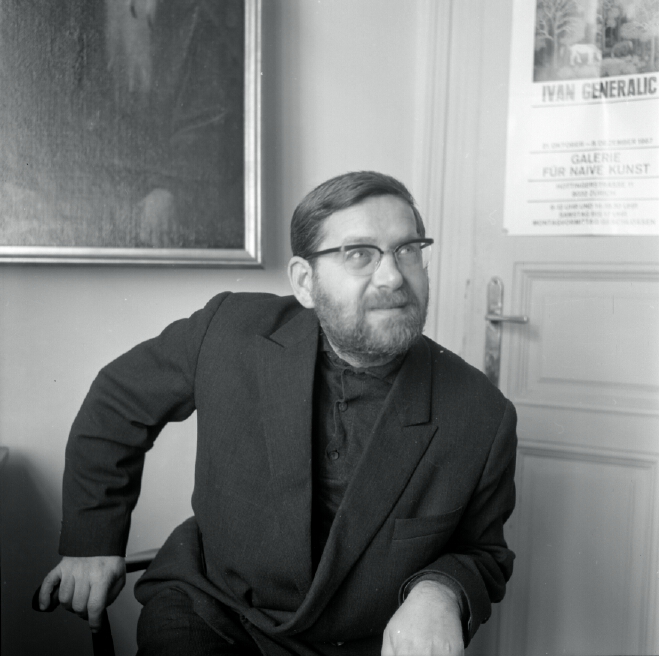
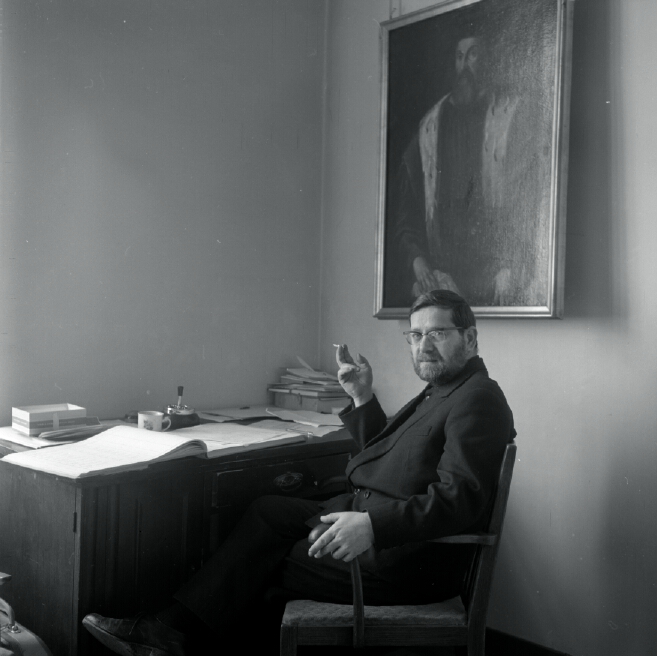
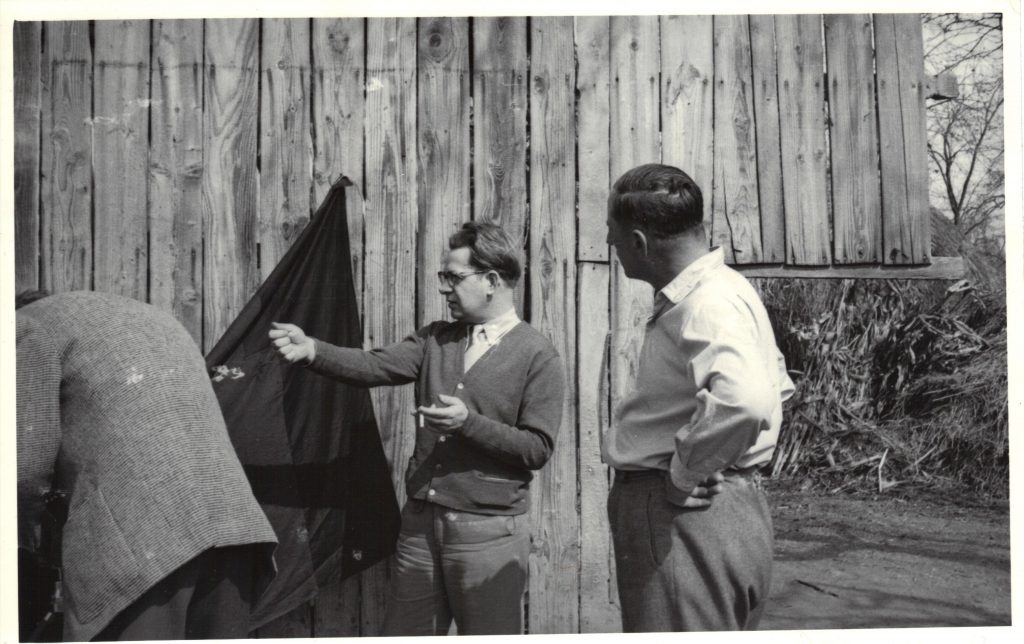

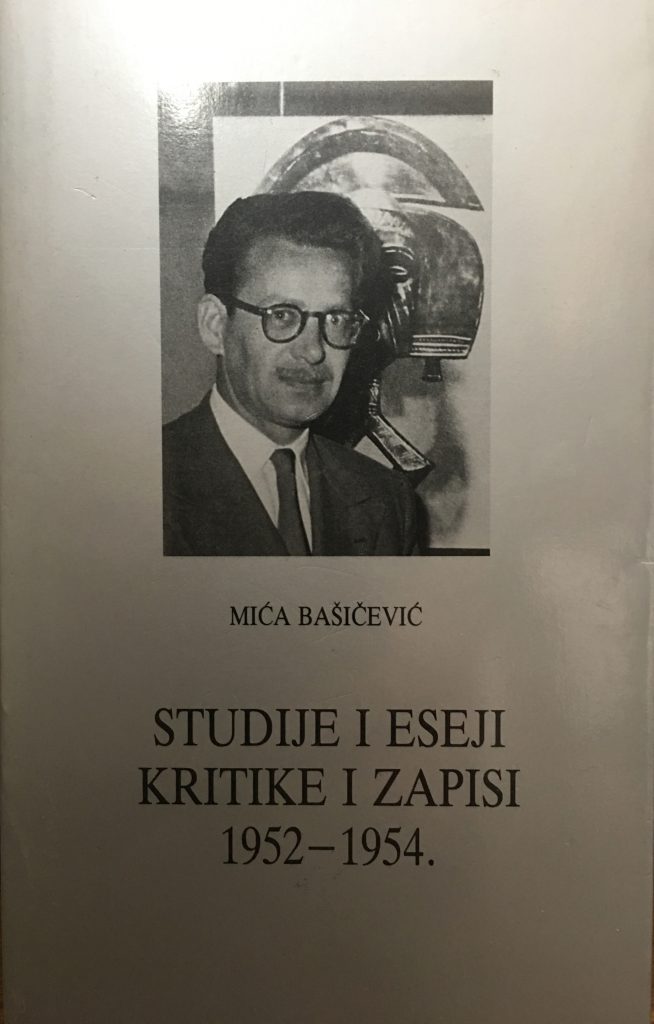
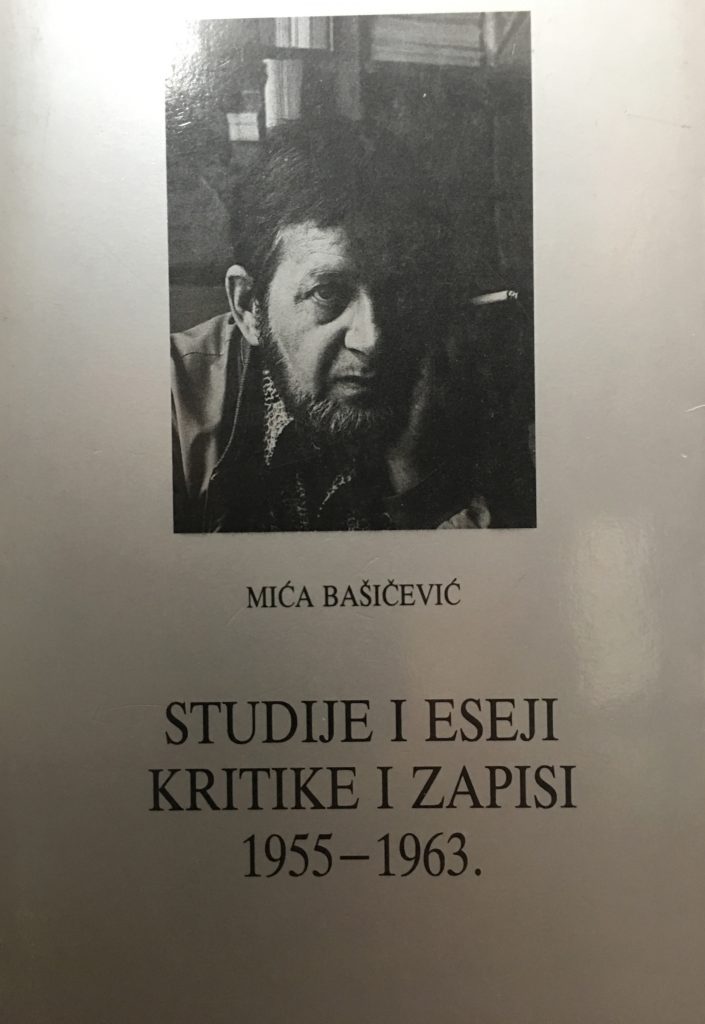
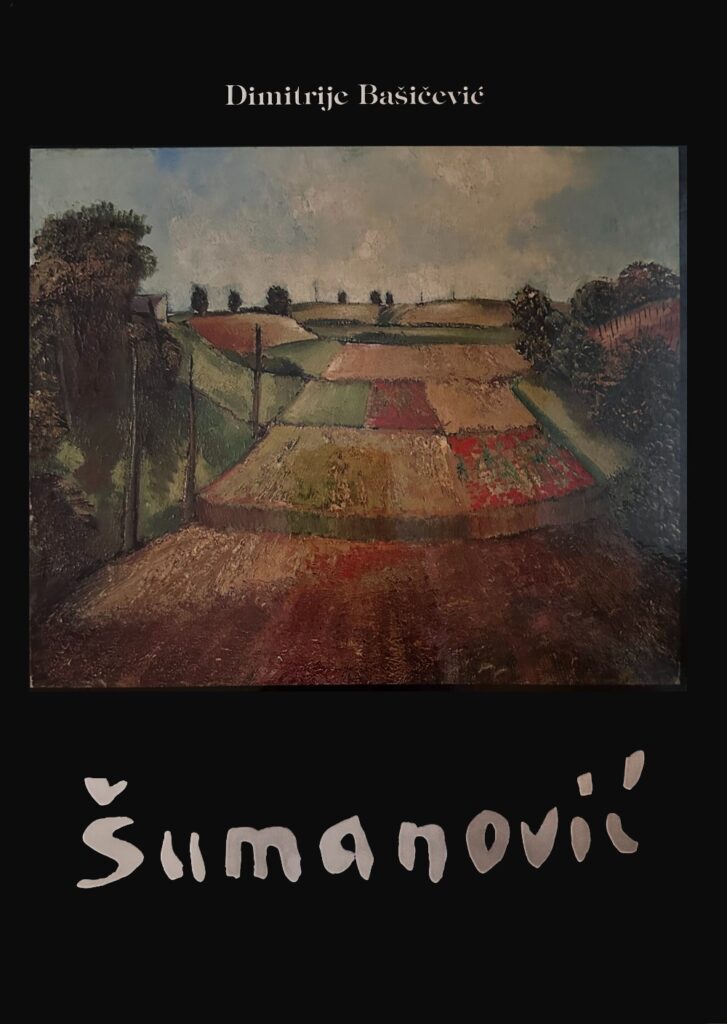
Bašičević is one of the key critics of the milieu and the time in which he was active as a critic; with his first monograph, on Sava Šumanović, he carried out in exemplary fashion the concrete task of a historian of modern art; and finally, in his late texts of a theoretical character, he was an original thinker on art within the highly complex processes of its linguistic and media transformations.
[…]
In his text on the painter Jakov Bratanić, Bašičević set out the following principle: “The function of criticism: evaluation, analysis, the struggle against outlived notions, commitment to living art, current and true. Also the formulation of hypotheses: the capacity for (correct or incorrect) prediction.” And indeed, these were some of the fundamental principles that Bašičević adhered to and lived up to in his vocation as a critic, prepared for the fact that demands so rigorously set and applied might provoke more opposition than approval in his milieu (among artists and fellow critics). One thing, however, became clear to him: there is hardly a less secure and less stable activity than criticism, because it cannot be practised routinely, as a long-term profession, but only ever as a vocation, in the name of certain ideals of one’s own incorporated into the general ideals of art.
[…]
From the mid-1970s onwards, most of Bašičević’s texts were devoted to theoretical questions concerning the situation of art amid the far-reaching changes brought about by the industrial development of society, by machine civilization and, more recently, by the unstoppable expansion of the mass media. Bašičević found the impetus for such reflections in the events initiated by the neo-constructivist movement New Tendencies, whose exhibition and organizational centre was the gallery where he worked as a curator for many years (the Gallery of Contemporary Art in Zagreb), while his close colleagues Radoslav Putar and Matko Meštrović (with whom he would come together in the group Gorgona) were among the leading theorists and advocates of this international movement. The essay Actuality of Functional Art (in the catalogue of the third New Tendencies exhibition, 1965) is the text in which Bašičević first addresses the consequences of the technical revolution for the phenomena and processes of artistic revolutions in the modern era. He observes that it leads to the weakening and even the extinction of “instinctive” art and to the establishment of what he calls “functional art”; in other words, in his view, it leads to “the abolition of metaphysical categories and the introduction of research methods”. And, as a concise conclusion: “Functional art is no longer a picture of the world. It does not represent the object. It creates it. Functional art does not recognize a transcendental meaning of forms…”
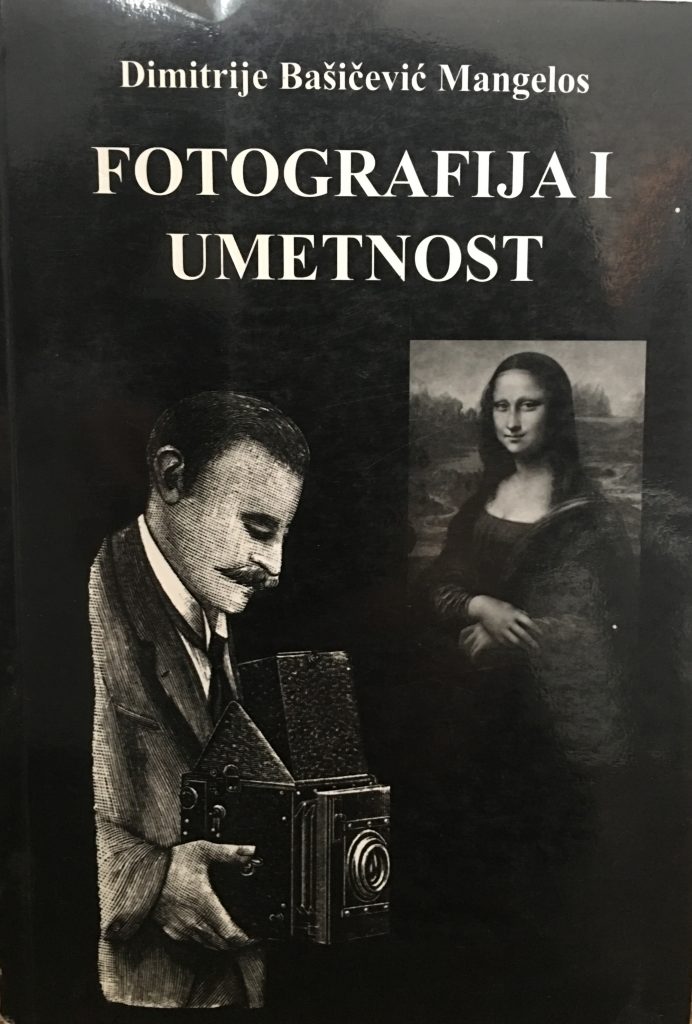
His assignment as head of CEFFT (the Centre for Photography, Film and Television, a department of the Gallery of Contemporary Art) led Bašičević to an ever-growing interest in photography, and almost all of his more important late texts would be devoted to the problems of this medium (Photography as a Thesis, 1977; Photography between Science and Art and Photography between Two Civilizations, both 1979; Magic and Experiment, 1980; The Medium of Photography and the Consequences of Photography and Photography as a Medium, both 1981; among others, and, as a summation, Consequences of Photography – Digressions on the Culture and Art of the 1970s, 1982). It hardly needs saying that for Bašičević photography was something incomparably more than a technique for recording things and phenomena: photography as the first mass medium and a mode of machine production, the multiplied image, was for him a pretext for examining the causes and consequences of the transformation not only of the language but also of the social functions and the very status of art, at a time of the constant expansion of its operational and semantic range.
Excerpts from: Ješa Denegri, Dimitrije Bašičević as Art Critic, Art Historian and Theoretician, Projekat, no. 7, Novi Sad, 1996, pp. 24–26

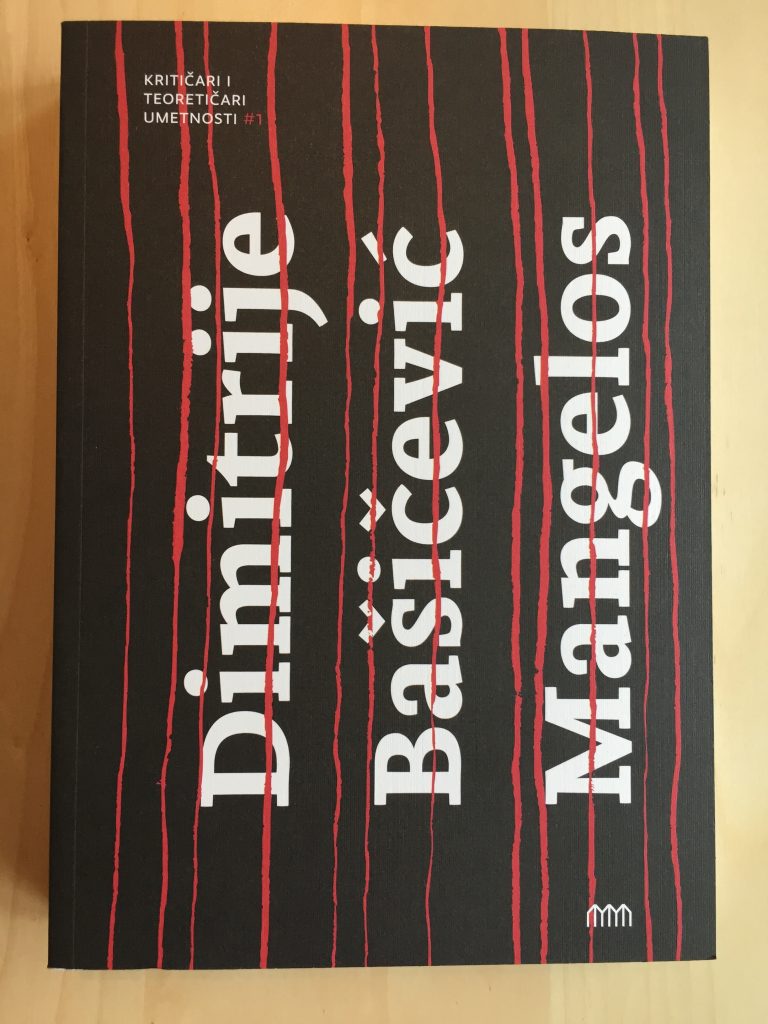
The Award for the best young visual artist in Serbia carries the name Dimitrije Bašičević Mangelos.
This Award is part of the regional YVAA Young Visual Artist Award